

The Law relating to the reporting of Ice
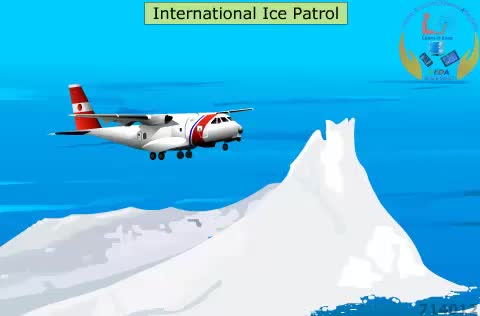
Ice Patrol Service
- The Ice Patrol contributes to safety of life at sea, safety and efficiency of navigation and protection of the marine environment in the North Atlantic. Ships transiting the region of icebergs guarded by the Ice Patrol during the ice season are required to make use of the services provided by the Ice Patrol.
- The Contracting Governments undertake to continue an ice patrol and a service for study and observation of ice conditions in the North Atlantic. During the whole of the ice season, i.e. for the period from February 15th through July 1st of each year, the south-eastern, southern and south- western limits of the region of icebergs in the vicinity of the Grand Banks of Newfoundland shall be guarded for the purpose of informing passing ships of the extent of this dangerous region; for the study of ice conditions in general; and for the purpose of affording assistance to ships and crews requiring aid within the limits of operation of the patrol ships and aircraft. During the rest of the year the study and observation of ice conditions shall be maintained as advisable.
- Ships and aircraft used for the ice patrol service and the study and observation of ice conditions may be assigned other duties provided that such other duties do not interfere with the primary purpose or increase the cost of this service.
- The Government of the United States of America agrees to continue the overall management of the ice patrol service and the study and observation of ice conditions, including the dissemination of information therefrom.
Danger messages
- The master of every ship which meets with dangerous ice, a dangerous derelict, or any other direct danger to navigation, or a tropical storm, or encounters sub-freezing air temperatures associated with gale force winds causing severe ice accretion on superstructures, or winds of force 10 or above on the Beaufort scale for which no storm warning has been received, is bound to communicate the information by all means at his disposal to ships in the vicinity, and also to the competent authorities. The form in which the information is sent is not obligatory. It may be transmitted either in plain language (preferably English) or by means of the International Code of Signals.
- Each Contracting Government will take all steps necessary to ensure that when intelligence of any of the dangers is received, it will be promptly brought to the knowledge of those concerned and communicated to other interested Governments.
- The transmission of messages respecting the dangers specified is free of cost to the ships concerned.
- All radio messages issued shall be preceded by the safety signal, using the procedure as prescribed by the Radio Regulations.
Information required in danger messages
The following information is required in danger messages:
- Ice, derelicts and other direct dangers to navigation:
- The kind of ice, derelict or danger observed.
- The position of the ice, derelict or danger when last observed.
- The time and date (Universal Co-ordinated Time) when the danger was last observed.
2. Tropical cyclones (storms)
- A statement that a tropical cyclone has been encountered. This obligation should be interpreted in a broad spirit, and information transmitted whenever the master has good reason to believe that a tropical cyclone is developing or exists in the neighborhood.
- Time, date (Universal Co-ordinated Time) and position of ship when the observation was taken.
- As much of the following information as is practicable should be included in the message:
- barometric pressure, preferably corrected (stating millibars, millimetres, or inches, and whether corrected or uncorrected);
- barometric tendency (the change in barometric pressure during the past three hours); true wind direction;
- wind force (Beaufort scale);
- state of the sea (smooth, moderate, rough, high);
- swell (slight, moderate, heavy) and the true direction from which it comes. Period or length of swell (short, average, long) would also be of value;
- true course and speed of ship.
Subsequent observations3. When a master has reported a tropical cyclone or other dangerous storm, it is desirable but not obligatory, that further observations be made and transmitted hourly, if practicable, but in any case at intervals of not more than 3 hours, so long as the ship remains under the influence of the storm.4.Winds of force 10 or above on the Beaufort scale for which no storm warning has been received. This is intended to deal with storms other than the tropical cyclones; when such a storm is encountered, the message should contain similar information to that listed under the paragraph but excluding the details concerning sea and swell.5.Sub-freezing air temperatures associated with gale force winds causing severe ice accretion on superstructures:
- Time and date (Universal Co-ordinated Time)
- Air temperature.
- Sea temperature (if practicable).
- Wind force and direction